What If Two Best Friends Accidentally Opened a Portal to Every Cartoon Universe?
Last updated:
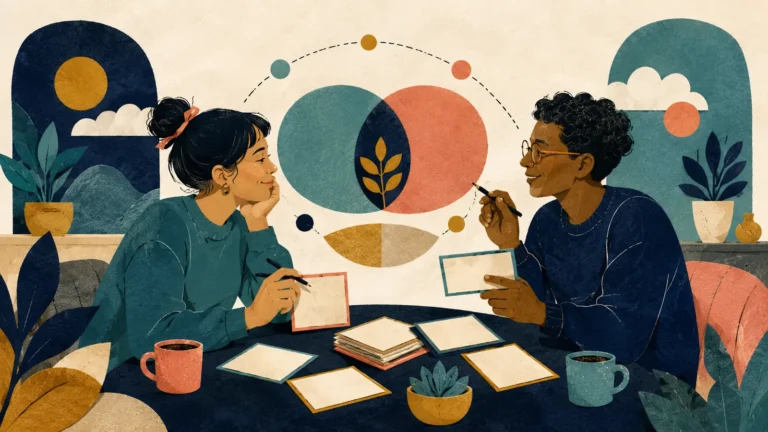
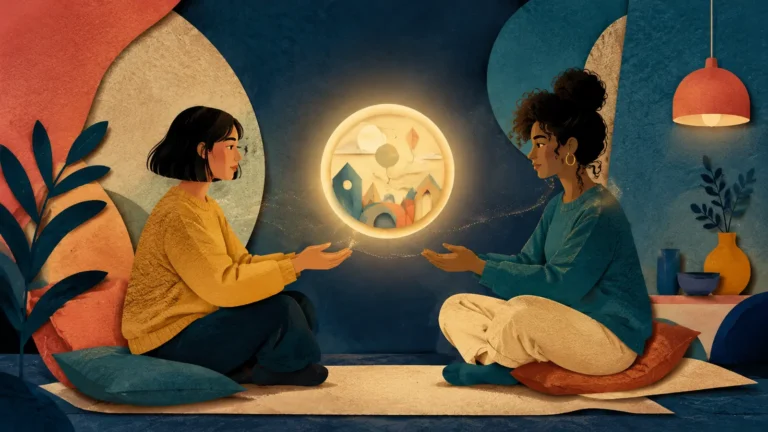
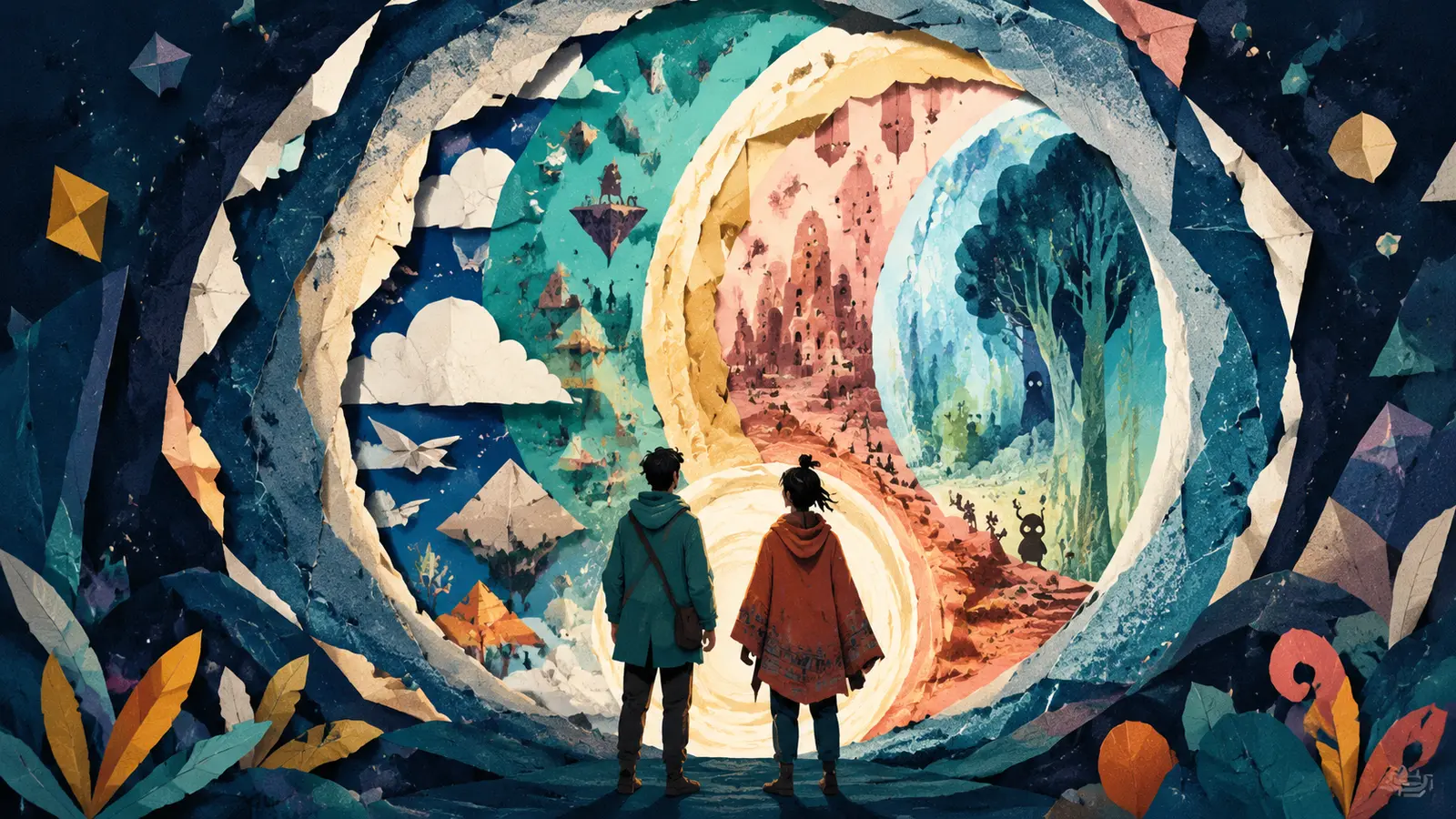
Mara and Dev are fictional best friends, and every person, place and event in this story is fictional. One rainy afternoon, they find a brass dial embedded in the back wall of Dev’s apartment closet. The dial has no labels, only a painted doorway that changes color when either of them touches it. Dev turns it once. The closet wall folds open like a page, revealing a bright street drawn in moving ink.
They agree to look for one minute and remain on the apartment side. That agreement lasts until a wind from the other world lifts Mara’s scarf through the opening. She reaches after it, Dev grabs her sleeve, and both tumble across the threshold. The portal snaps shut behind them, leaving the dial in Dev’s apartment and a thin silver seam in the painted sky.
The city where outlines decide what is real
The first world is called Paper Harbor. Buildings are flat until someone traces their edges; then doors deepen, stairs rise and windows become usable. Residents redraw cracked walls every morning before the rain can wash them away. Mara is delighted by the cooperative rhythm. Dev is worried because every step they take leaves heavy charcoal marks across the pale streets.
A local mapmaker explains that the silver seam is a wandering exit. To reopen it, Mara and Dev must follow the seam wherever it passes next. Before they can leave, one of Dev’s footprints cuts through the outline of a bridge. The bridge flattens while a delivery cart is halfway across. Mara traces a replacement arch and Dev braces the paper span until the cart reaches safety. Their mistake is repairable, but not invisible. They promise the mapmaker they will stop treating unfamiliar rules as scenery.
A forest that reacts to unfinished choices
The seam leads into the Tiltwood, where every tree leans toward the decision a traveler is most likely to make. When Mara considers turning left, branches bend left. When Dev imagines climbing for a better view, trunks knot themselves into ladders. Contradictory thoughts make the forest shudder between shapes.
Dev wants to slow down and test each path. Mara fears that hesitation will trap them inside a maze generated by hesitation itself. She chooses a direction without telling him. The forest straightens for her but closes around Dev, who is still comparing routes. They can hear each other but cannot see through the braided trunks. For the first time, the journey exposes a fault line in their friendship: Mara treats movement as courage, while Dev treats caution as responsibility.
They escape only when Mara admits she is frightened and Dev makes a choice before he feels certain. The forest opens a narrow path between them. Their reunion is not sentimental. Dev is angry that she left him, and Mara is angry that his long pause made her carry the decision alone. Both complaints are true. They continue after agreeing that the next choice must be spoken, even if the answer is incomplete.
The temptation of a world that edits discomfort
Beyond the forest lies Softglass Square. Here, unpleasant moments appear as cloudy marks in the air. Residents polish a mark and replace it with a smoother version of what happened. An argument becomes a calm exchange. An embarrassing fall becomes an elegant bow. The square offers Mara and Dev rooms, food and the power to revise any memory that makes returning home feel difficult.
Mara wants to stay for one night. She is tired of being the person who acts first and apologizes later. The square could remove her guilt about the bridge and the forest. Dev refuses because their altered memories would no longer describe the same journey. He compares the offer to borrowing one deliberately chosen memory: even limited access can change how friends interpret each other, and this place proposes something more dangerous by making regret feel optional.
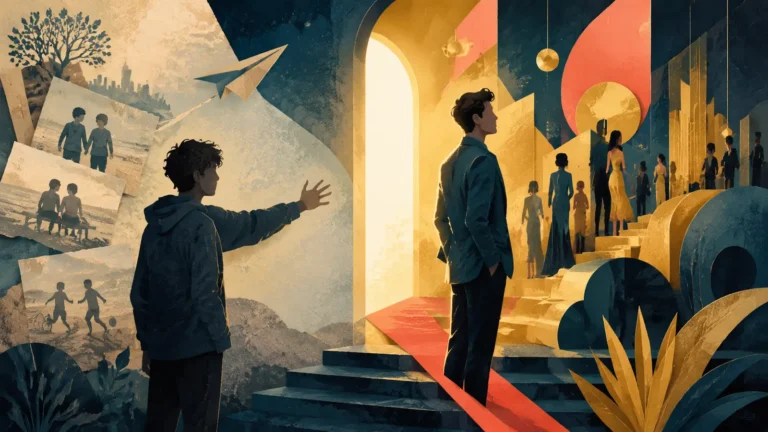
Mara accuses him of valuing accurate pain more than her relief. Dev answers that he values her ability to decide later with the full story intact. The square responds to their conflict by producing two exits, one warm and inviting, the other cold and narrow. Mara stands before the warm door long enough for Dev to realize she may genuinely remain. He does not threaten to leave without her. He tells her what closing the portal will require and lets the choice stay hers.
The world that turns jokes into weather
Mara finally chooses the narrow exit. It opens above the Laughing Current, an ocean of floating islands where spoken moods become weather. A playful insult creates a harmless gust. Forced cheer produces brittle hail. Suppressed resentment gathers as low thunder that follows the speaker.
The friends normally use humor to soften conflict, but here every joke carries its hidden pressure. Mara teases Dev about needing instructions for breathing, and a sharp wind knocks loose the moorings of a small island. Dev replies that she would sprint into a volcano if it looked interesting, and the sky flashes white. Their familiar banter is not suddenly cruel; affection, irritation and fear have always shared space inside it. The world merely makes the mixture impossible to ignore.
They help residents retie the island using ribbons that strengthen when someone says exactly what they mean. Mara says she resented Dev for making caution sound wiser than action. Dev says he envied how easily people trusted her confidence. The storm weakens. Neither statement proves one friend right. It gives their humor a context they had previously expected each other to guess.
Closing the portal would erase a refuge
The silver seam finally reaches Lantern Station, where doorways to countless original worlds arrive and depart like trains. A station keeper shows them the route home, then explains the cost: the brass dial has damaged the boundaries between worlds. If they close their portal permanently, the crossings will seal. If they leave it open, the leaks will widen until incompatible rules spread into places that cannot survive them.
Dev wants to close it immediately. Mara sees travelers at the station who depend on crossings for work, family and refuge. She argues that they should not destroy a network because they caused one unstable opening. The keeper clarifies that the network existed before them; only their uncontrolled doorway must close. Still, several residents of Softglass Square have followed the seam, hoping to enter the ordinary world. Closing the portal will deny them that escape.
Mara asks for time to find another route for those residents. Dev fears delay will cause more damage. Their disagreement is not adventure versus cowardice. It is a conflict between responsibility to people already affected and responsibility to people who could be harmed next. They compromise on one final station cycle. Dev works with the keeper to stabilize the seam while Mara helps the travelers apply for passage through safe doors. Not everyone receives the answer they want.
Home is not the same side of the doorway
At the final bell, Mara and Dev step through their portal and turn the brass dial together. The closet wall becomes solid. A line of ink remains across the floor, and Dev’s apartment now casts a square shadow where no object stands. The journey has left minor damage that cannot be cleaned away as though curiosity had no consequences.
They contact the building manager about the altered wall without inventing an innocent explanation. They also write down every rule they remember in case the seam reappears. Mara no longer assumes that moving first is always brave. Dev no longer uses caution to postpone every uncomfortable choice. Neither has adopted the other’s style.
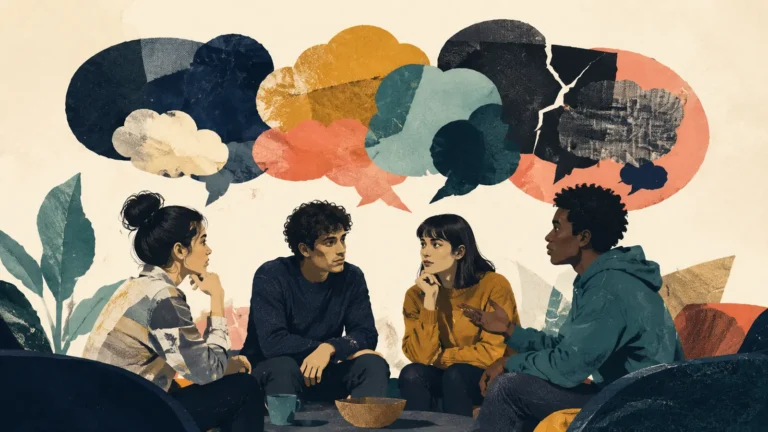
What changes most is how they handle disagreement. They have already imagined a friendship with twenty-four hours of unfiltered thoughts; the portal teaches a different lesson. Friends do not need identical interpretations to remain loyal. They need a way to make decisions when both interpretations matter and the consequences reach beyond them.
Mara sometimes misses Softglass Square. Dev wonders whether closing the doorway harmed someone they never met. They cannot resolve those doubts by declaring the adventure worthwhile. They keep the ink line visible. It reminds them that wonder and damage can arrive together, and that friendship is tested by accepting shared responsibility for the way home.